|
|
|
|
|
|
|
|
|
|
|
|
|
|
|
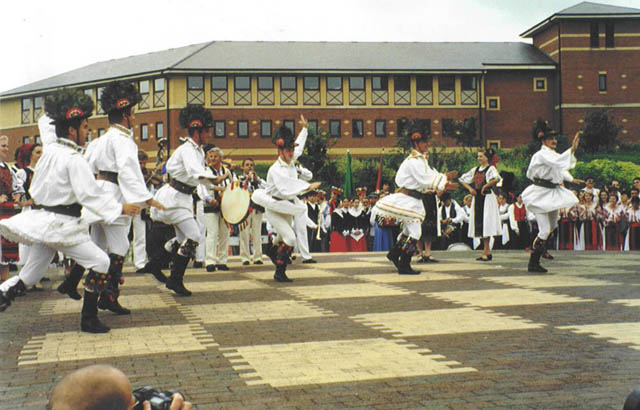
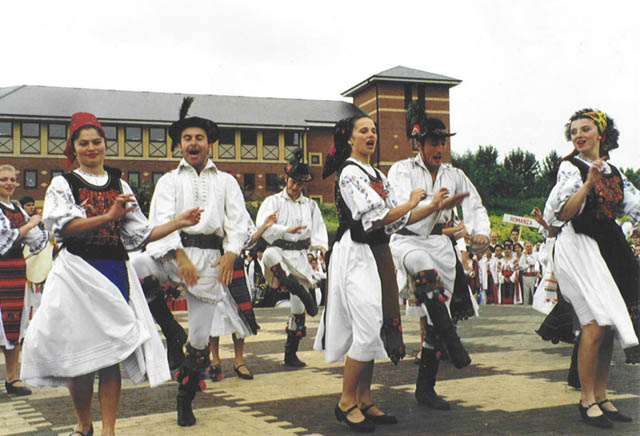
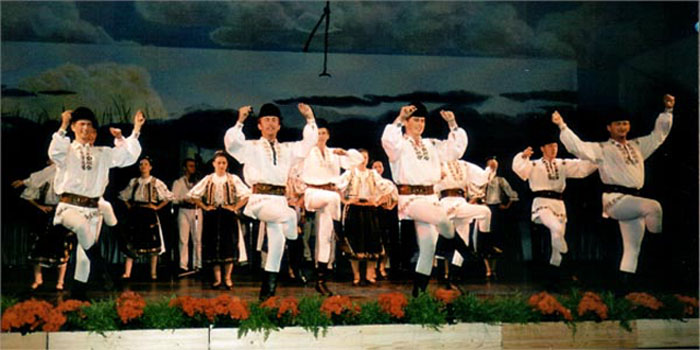
“Going in the army” song. “Fecioresc des” from Corusu and Mera. “Hora nevestelor” from Rosia de Secas
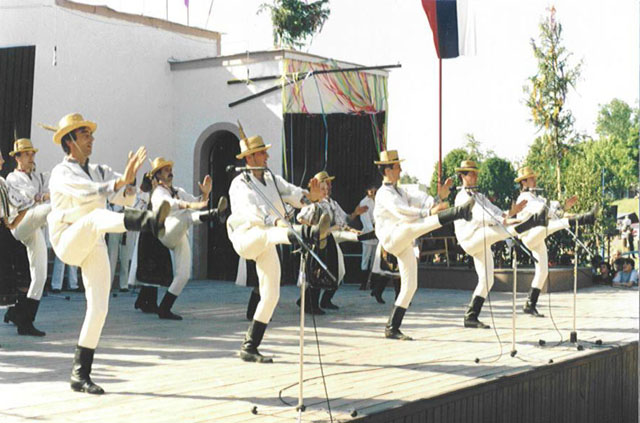
Close to our town - Cluj-Napoca - there is an area well known by the boys'
dances of virtuosity. It is called “Dealurile Clujului, Gilaului si Dejului”. The elements and
the choreograpy figures, which constitute these dances, are complicated but spectacular. Every
time the boys are going to the dance place they are singing songs together with the musicians.
“Cantece de catanie” (Going in the army song) expresses this. The boys who are singing and dancing
very well are more respected in the community. During the dance they are improvising depending on
their talent. In the same time they initiate a competition so that it will be soon an artistic
euphoria. In those places, where the boys and men were gone to work somewhere else or they are gone
in the army, the girls and wives were meeting in the so called “sezatoare” and they were working
and dancing together there. This way has been born interesting dances, which have as the basic rhythm,
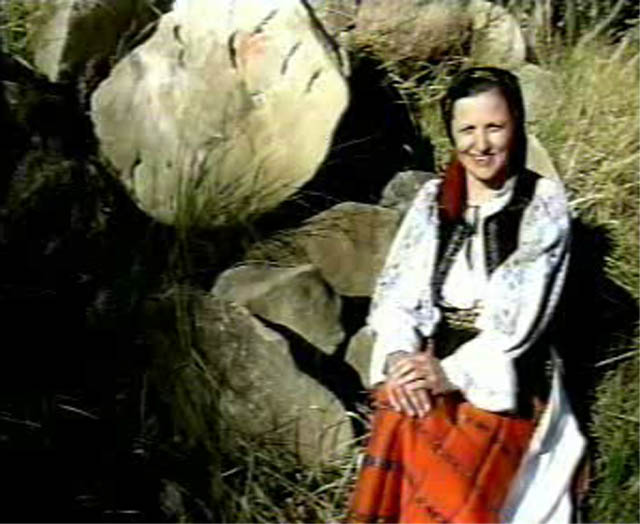
the couple dances rhythm. “Hora nevestelor” (The dance of the wives) is danced in Rosia de Secas
village, Alba district. The simple and the complicated steps played in a syncopated rhythm, but
following the music in an asymmetric rhythm are shocking many times. |

|
 |
 |
|
|
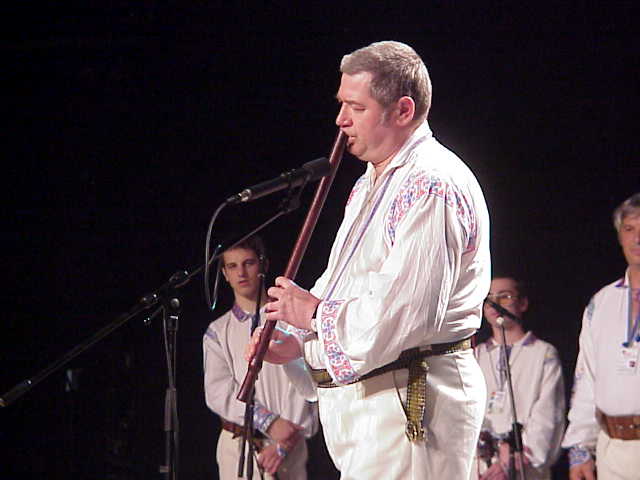
Bugle violin - Dumitru Pasca
A strange and peculiar instrument coming from the beginning of the century is the
bugle violin or the violin with the trumpet. This violin was made after the gramophone was invented
and it has something from its principle “the trumpet” is the box of resonance. This instrument was
settled in the Bihor mountains area, in the North-West of Romania. As a result of the construction
technique, the instrumental songs are played most of the time on the “E” and “A” strings. The sound
produced by this violin with trumpet is very metallic and ample that makes it heard at the dance
even if there are a lot of people there. |
|
|
|
|
|
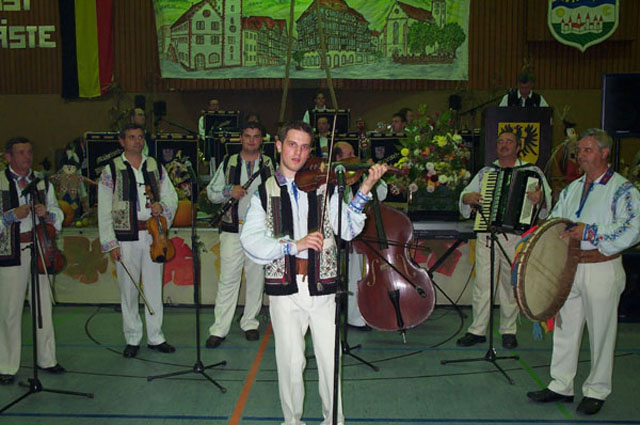
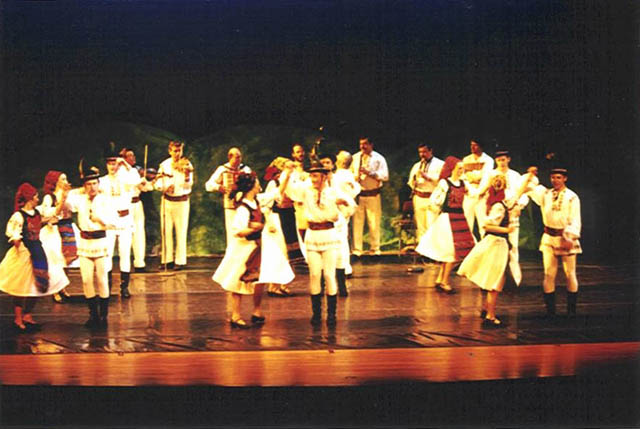
Songs and dances from Banat - orchestra
The most beautiful and melodiously music is found in the folkloric Banat
area. That's why it is the most listened music on the different party occasions. “Doinele”
from Banat produce artistic emotions and when the musicians play the dances, “you feel like dancing”.
Their style is unique and so are the instruments they are using. The most popular instrument is
“taragotul”. |

|
|
|
|
|
|
Dances from Banat
Analyzing the dances from Banat it can be observed a special particularity: the
music is played on “timp” and the dance is “contratimp” which means a little delay of
the dance.A perfect relation between the musicians and the dancers offers many beautiful
moments of shows. |

|
|
|
|
|
|
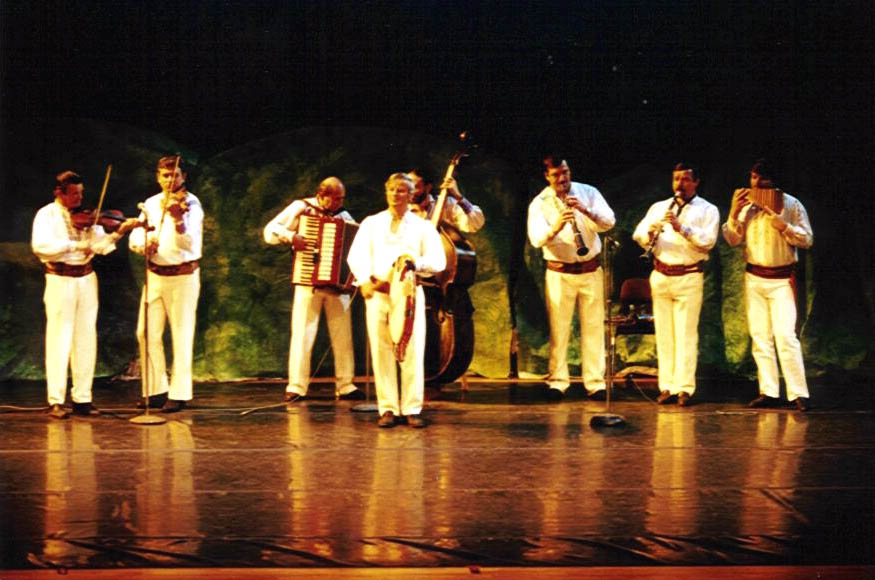
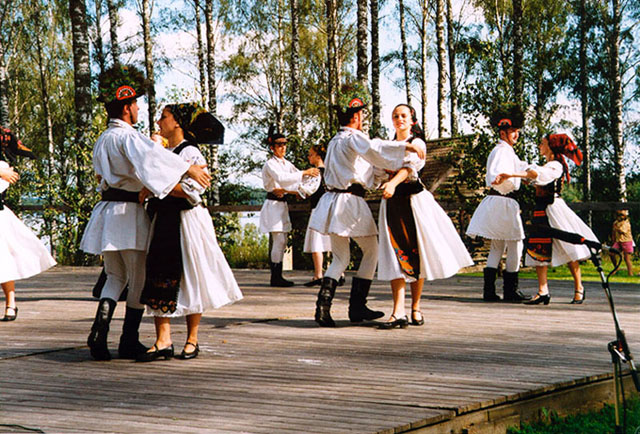
“Invartite” and “Batute” from Castau, Orastie - orchestra
“Invartitele” in the asymmetric rhythm and “Batutele” in the binary rhythm are the
most frequent dances from the Center and the South of Transylvania. The musicians know a lot of songs.
They are reserved to the best dancers or they are called by their names. “Invartitele” and “batutele”
we are playing are from the repertoire of the violinist Relu Silvisan from Castau, Orastie. |

|
|
|
|
|
|
|
|
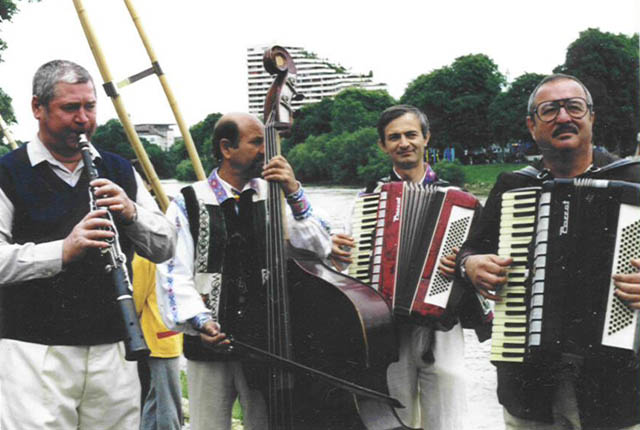
Florin Munteanu - acordeon
Becomed in time traditional intrument his repertory is specific of the fiddler.
The violin theacher from the Music High School from Cluj-Napoca demonstrate, singing a lot of
songs fron his large repertory : “Doina banateana”, “Hora” si “Geampara” from Dobrogea. |

|
|
|
|
|
|
Aletea
In this romanian village from Hungary, the most archaic dances were preserved through
the times: “Lunga”, “Marunteaua”, “Tiganeasca” and “Dragostea”. These dances, belonging to the Tara
Zarandului folkloric area, are going on horizontally and vertically, being impressive by lirysm and
virtuosity. You have to be a very good dancer in order to be in competition with the villagers. |
|
|
|
|
|
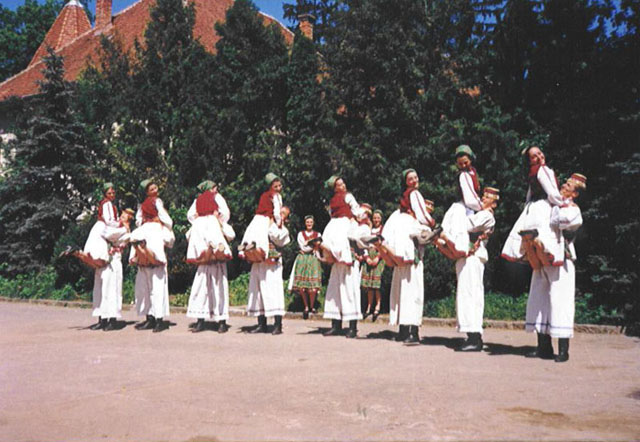
Dances from Farau, Alba County
Through the time, the best musicians and dancers have created a peculiar style in
their belonging area. In this part of the Transylvanian Plane, the magnificent violin player Alexandru
Titrus has always played “in struna” for the dancers. On their turn, the dancers have enchanted by
their proud to take part to the most popular and beautiful dances: “Invartita”, “Fecioreasca cu fete”,
“Hartagul” and also “Haidaul”. Dansing circular but also free style, a competition raise between the
couples of dancers. There was always a grace in the boys figures when they lead their partners. |
|
|
|
|
|
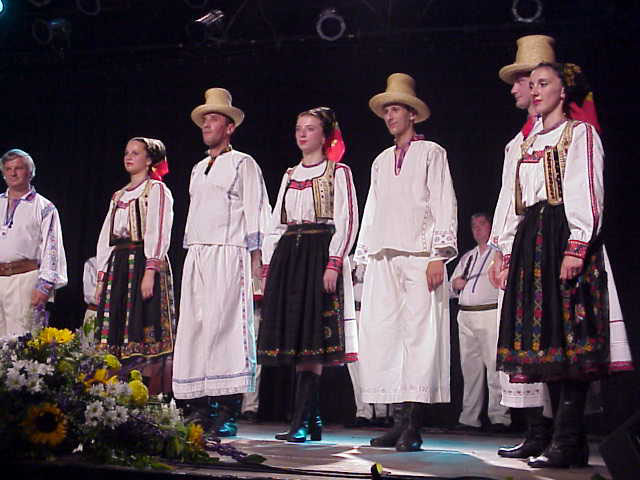
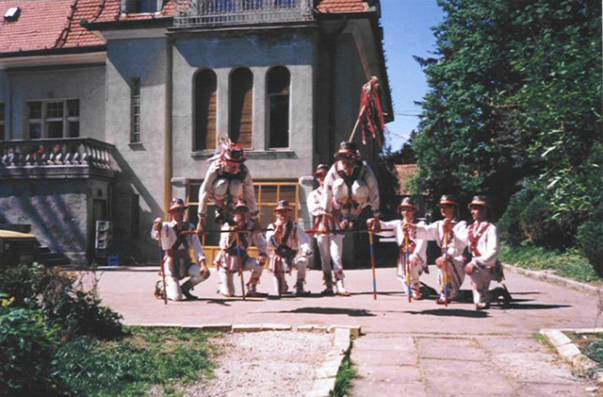
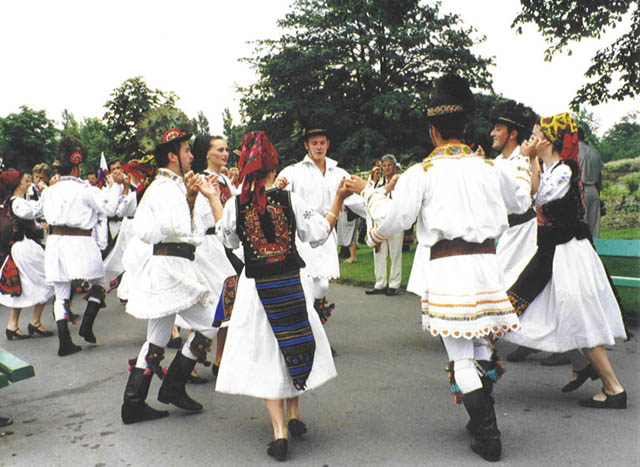
Dances from Rupea, Brasov County
We are thinking that nowhere, at a comunity level, the choreographical folklore was
as well preserved as in Rupea, situated at about 60 km far from the beautiful city - Brasov. On the occasion
of Christmas and also on different other holidays (“Balul Portului”), it takes place a more than educative
activity. The dance is visible perpetuated from generation to generation and also does the decent and
fascinating costume. In the “Jocul Mare” from here you can find “Maruntisurile” : “Musamaua”, “Hoina”,
“Sarba Popii”, “Hodoroaga”, but you can also find the impressive by their beauty, the “Purtata feciorilor”,
“Batuta”, “Purtata cu fata” and “Invartitele” in an asymetrical rhythm (aksak). The dancers in our group
have learned them very rigorously and they dance them with much pleasure. |

|
|
|
|
|